
 A Oneindia Venture


 Click it and Unblock the Notifications
Notes to Accounts of Aspira Pathlab & Diagnostics Ltd.
Mar 31, 2025
2.13 Provisions and contingent liabilities
A provision is recognized when the Company has a present obligation as a result of past event, it is probable that an outflow of
resources embodying economic benefits will be required to settle the obligation and a reliable estimate can be made of the amount of
the obligation. Provisions are not discounted to their present value and are determined based on the best estimate required to settle
the obligation at the reporting date. These estimates are reviewed at each reporting date and adjusted to reflect the current best
estimates.A contingent liability is a possible obligation that arises from past events whose existence will be confirmed by the
occurrence or non-occurrence of one or more uncertain future events beyond the control of the Company or a present obligation that
is not recognized because it is not probable that an outflow of resources will be required to settle the obligation. A contingent liability
also arises inextremely rare cases where there is a liability that cannot be recognized because it cannot be measured reliably. The
Company does not recognize a contingent liability but discloses its existence in the standalone financial statements.
2.14 Earnings per share
Basic earnings per share are calculated by dividing the net profit or loss for the year attributable to equity shareholders (after
deducting preference dividends and attributable taxes) by the weighted average number of equity shares outstanding during the
year. The weighted average number of equity shares outstanding during the year is adjusted for events such as bonus issue, bonus
element in a rights issue, share split, and reverse share split (consolidation of shares) that have changed the number of equity shares
outstanding, without a corresponding change in resources.
For the purpose of calculating diluted earnings per share, the net profit or loss for the year attributable to equity shareholders and
the weighted average number of shares outstanding during the year are adjusted for the effects of all dilutive potential equity
shares.
2.15 Cash and cash equivalents
Cash and cash equivalents in the balance sheet comprise cash at bank and on hand and short-term investments with an original
maturity of three months or less, which are subject to an insignificant risk of changes in value.
For the purposes of the statement of cash flows, Cash and cash equivalents consist of cash at bank and on hand and short-term deposits,
net of outstanding bank overdrafts as they are considered an integral part of the Company''s cash management.
2.16 Segment reporting policy
Operating segments are reported in a manner consistent with the internal reporting provided to the Chief Operating Decision M aker.
The chief operating decision maker (CODM) is responsible for allocating resources and assessing performance of the operating
segments and has been identified as the Board of Directors of the Company. Refer note 35 for segment information presented.
2.17 Cash Flow Statement
Cash flows are reported using the indirect method, whereby profit for the year is adjusted for the effects of transactions of a non¬
cash nature, any deferrals or accruals of past or future operating cash receipts or payments and item of income or expenses
associated with investing or financing cash flows. The cash flows are segregated into operating, investing and financing activities.
2.18 Recent Accounting Developments
Ministry of Corporate Affairs ("MCA") notifies new standard or amendments to the existing standards. There is no such notific ation
which would have been applicable from April 1, 2025.
35. Segment information
Primary segments: Business Segment
The Company is solely engaged in the business of running laboratories for carrying out Pathological investigations in various branches of
Bio-chemistry, Hematology, Histopathology, Microbiology, Immuno-chemistry, Immunology, Virology, Cytology, other pathological and
radiological investigations. The Board of Directors of the Company, which has been identified as being the chief operating decision maker
(CODM), evaluates the Company''s performance, allocate resources based on the analysis of the various performance indicator of the
Company as a single unit. Therefore there is no reportable segment for the Company, in accordance with the requirements of Indian
Accounting Standard 108- ''Operating Segments'', notified under the Companies (Indian Accounting Standard) Rules, 2015."
Employee benefit under defined contribution plan comprising of provident fund and ESI scheme is recognised based on the amount of
obligation of the Company to contribute to the plan. The contribution is paid to Provident Fund & ESI authorities which is expensed
during the year.
The total expenses recognised in statement of profit and loss Rs.26.21 lakh (for the year ended 31 March, 2024: Rs.25.59 lakh ) represents
contributions payable to provident fund & ESI Scheme by the Company at rates specified in the rules of the plans. As at 31 March, 2024,
employer''s contributions of Rs.2.19 lakh (as at 31 March, 2024: Rs.2.14 lakh) due in respect of 2024-25 (2023-24) reporting period had not
been paid over to the plans. The amounts were paid subsequent to the end of the respective reporting periods.
37.2 Defined benefit plans
The Group has a defined benefit gratuity plan which is unfunded. Every employee who has completed five years or more of service gets
a gratuity on departure at 15 days salary (last drawn salary) for each completed year of service or part thereof in excess of six months. The
present value of the defined benefit obligation and the related current service cost are measured using the Projected Unit Credit method
with actuarial valuations being carried out at each balance sheet date.
The Company activities expose it to market risk, liquidity risk, interest rate and credit risk. The company''s risk management is carried out
by the senior management under policies approved by the board of directors. The Board provides guiding principles for overall risk
management, as well as policies covering specific areas such as credit risk and liquidity risk. This table explains the sources of risk which
the entity is exposed to and how the entity manages the risk.
(i) Liquidity risk
The Company requires funds for short-term operational needs. The Company remains committed to maintain a healthy liquidity,
gearing ratio and strengthening the balance sheet. The maturity profile of the Company''s financial liabilities and realisabilit y of
financial assets based on the remaining period from the date of balance sheet to the contractual maturity date is given in the table
below. The figures reflect the contractual cash obligation of the company.
The sensitivity analysis below have been determined based on the exposure to interest rates at the end of the reporting period. For floating
rate liabilities, the analysis is prepared assuming the amount of the long-term borrowing balance at the end of the reporting period was
outstanding for the whole year. A 100 basis point increase or decrease is used when reporting interest rate risk internally to key
management personnel and represents management''s assessment of the reasonably possible change in interest rates.
defaults. The Company is exposed to credit risk for receivables, cash and cash equivalents, bank balances other than cash and cash
equivalents, investments and loans.
Credit risk management considers available reasonable and supportable forward-looking information including indicators like external
credit rating (as far as available), macro-economic information such as regulatory changes, government directives, market interest rate.
Only high rated banks are considered for placement of deposits. Bank balances are held with reputed and creditworthy banking
institutions
None of the Company''s cash equivalents are past due or impaired. Regarding trade and other receivables, the Company has accounted
for impairment based on expected credit losses method as at 31 March, 2025 & 31 March, 2024 based on expected probability of default.
40. The Company don''t have any foreign currency exposure during the year.
41. The Code on Social Security, 2020 (''Code'') relating to employee benefits during employment and post- employment benefits received
Presidential assent in September 2020. The Code has been published in the Gazette of India. However, the date on which the Code will
come into effect has not been notified. The Company will assess the impact of the Code when it comes into effect and will rec ord any
related impact after the Code becomes effective.
42. Additional disclosures with respect to amendments to Schedule III
a) The Company had not granted any loans or advances in the nature of loans to promoters, directors, KMPs and the related parties (as
defined under Companies ct, 2013), either severally or jointly with any other person, that are repayable on demand or without
specifying any terms or period of repayment.
b) The Comany was not holding any benami property and no proceedings were initiated or pending against the Company for holding
any benami property under the Benami Transactions (Prohibition) Act, 1988 (45 of 1988) and rules made thereunder.
c) The Company had not been declared a wilful defaulter by any bank or financial institution or other lender (as defined und er the
Companies Act, 2013) or consortium thereof, in accordance with the guidelines on wilful defaulters issued by the Reserve Bank of
India.
d) The Company did not have any transactions with struck off companies under section 248 of the Companies Act, 2013 or section 560
of Companies Act, 1956.
e) The Company did not have any charges or satisfaction which were yet to be registered with ROC beyond the statutory period
f) The Company has not traded or invested in Crypto currency or Virtual Currency during year ended 31 March, 2025.
g) The Company has not advanced or loaned or invested (either from borrowed funds or share premium or any other sources or kind of
funds) any funds to or in any other persons or entities, including foreign entities ("Intermediaries"), with the understanding, whether
recorded in writing or otherwise, that the Intermediary shall, directly or indirectly lend or invest in other persons or entities identified
in any manner whatsoever by or on behalf of the Company ("Ultimate Beneficiaries") or p rovide any guarantee, security or the like
on behalf of the Ultimate Beneficiaries.
h) The Company has not received any funds from any persons or entities, including foreign entities ("Funding Parties"), with the
understanding, whether recorded in writing or otherwise, that the Company shall, directly or indirectly, lend or invest in other persons
or entities identified in any manner whatsoever by or on behalf of the Funding Party ("Ultimate Beneficiaries") or provide any
guarantee, security or the like on behalf of the Ultimate Beneficiaries.
i) The Company did not have any transaction which had not been recorded in the books of account that had been surrendered or disclosed
as income during the year in the tax assessments under the Income Tax Act, 1961 (such as, search or survey or any other relevant
provisions of the Income Tax Act, 1961).
j) The Company did not have any transaction which had not been recorded in the books of account that had been surrendered or disclosed
as income during the year in the tax assessments under the Income Tax Act, 1961 (such as, search or survey or any other relevant
provisions of the Income Tax Act, 1961).
43. The Company has used accounting softwares for maintaining its books of account for the year ended 31.03.2025 which have a feature
of recording audit trail (edit log) facility as per the requirements of proviso to Rule 3(1) of the Companies (Accounts) Rules, 2014 and
the same has operated throughout the year for all relevant transactions recorded in the respective software except the feature of
recording audit trail (edit log) facility was not enabled at the database level to log any direct data changes for the Tally Prime accounting
software used for maintaining the books of accounts. Further, for the periods where audit trail (edit log) facility was enabled and
operated for the respective accounting software, we did not come across any instance of the audit trail feature being tampere d with.
44. Ratio- Refer Annexure to Note No-44
45. Previous year''s figures have been regrouped / reclassified/ rearranged wherever necessary to correspond with the current year''s
classification/disclosure.
46. The Standalone Financial Statements were approved by the Board of Directors and authorised for issue on 16th
May, 2025.
For Sarda Soni Associates LLP
Chartered Accountants
F.R.N. 117235W/W100126 Dr. Pankaj Shah Nikunj Mange
Managing Director Director
DIN-02836324 DIN-08489442
(Manoj Kumar Jain)
Partner
Membership No. 120788
Date: 16th May, 2025 Balkrishna S. Talawadekar Krupali Shah
Place: Mumbai Chief Financial Officer Company Secretary
Mar 31, 2024
2.13 Provisions and contingent liabilities
A provision is recognized when the Company has a present obligation as a result of past event, it is probable that an outflow of resources embodying economic benefits will be required to settle the obligation and a reliable estimate can be made of the amount of the obligation. Provisions are not discounted to their present value and are determined based on the best estimate required to settle the obligation at the reporting date. These estimates are reviewed at each reporting date and adjusted to reflect the current best estimates.
A contingent liability is a possible obligation that arises from past events whose existence will be confirmed by the occurrence or non-occurrence of one or more uncertain future events beyond the control of the Company or a present obligation that is not recognized because it is not probable that an outflow of resources will be required to settle the obligation. A contingent liability also arises in extremely rare cases where there is a liability that cannot be recognized because it cannot be measured reliably. The Company does not recognize a contingent liability but discloses its existence in the financial statements.
2.14 Earnings per share
Basic earnings per share are calculated by dividing the net profit or loss for the year attributable to equity shareholders (after deducting preference dividends and attributable taxes) by the weighted average number of equity shares outstanding during the year. The weighted average number of equity shares outstanding during the year is adjusted for events such as bonus issue, bonus element in a rights issue, share split, and reverse share split (consolidation of shares) that have changed the number of equity shares outstanding, without a corresponding change in resources.
For the purpose of calculating diluted earnings per share, the net profit or loss for the year attributable to equity shareholders and the weighted average number of shares outstanding during the year are adjusted for the effects of all dilutive potential equity shares.
2.15 Cash and cash equivalents
Cash and cash equivalents in the balance sheet comprise cash at bank and on hand and short term investments with an original maturity of three months or less, which are subject to an insignificant risk of changes in value.
For the purposes of the statement of cash flows, Cash and cash equivalents consist of cash at bank and on hand and short term deposits, net of outstanding bank overdrafts as they are considered an integral part of the Company''s cash management.
2.16 Segment reporting policy
Operating segments are reported in a manner consistent with the internal reporting provided to the Chief Operating Decision Maker. The chief operating decision maker (CODM) is responsible for allocating resources and assessing performance of the operating segments and has been identified as the Board of Directors of the Company. Refer note 35 for segment information presented.
2.17 Cash Flow Statement
Cash flows are reported using the indirect method, whereby profit for the year is adjusted for the effects of transactions of a non-cash nature, any deferrals or accruals of past or future operating cash receipts or payments and item of income or expenses associated with investing or financing cash flows. The cash flows are segregated into operating, investing and financing activities.
2.18 Recent Accounting Developments
Ministry of Corporate Affairs ("MCA") notifies new standard or amendments to the existing standards. There is no such notification which would have been applicable from April 1, 2024.
Note- The petitioner Rais Diagnostic Center (Lease property- Lessor) has filed three summary suits in Bhiwandi court against the Company for claiming the compensation of Rs 111.50 Lakh in aggregate by serving the summons in the month of April & May 2024 for the premature termination of lease contract made by the company. The hearing of the case is in process & awaiting for the judgement & order. *Based on legal advice taken/ status of the case, the management believes that the company has strong chances of success in above mentioned case and hence no provision is considered necessary in respect thereof at this point in time as these claims are not tenable and the likelihood of liability devolving on the company is less than probable.
34. Segment information
Primary segments: Business Segment
The Company is solely engaged in the business of running laboratories for carrying out Pathological investigations in various branches of Bio-chemistry, Hematology, Histopathology, Microbiology, Immuno-chemistry, Immunology, Virology, Cytology, other pathological and radiological investigations. The Board of Directors of the Company, which has been identified as being the chief operating decision maker (CODM), evaluates the Company''s performance, allocate resources based on the analysis of the various performance indicator of the Company as a single unit. Therefore there is no reportable segment for the Company, in accordance with the requirements of Indian Accounting Standard 108- ''Operating Segments'', notified under the Companies (Indian Accounting Standard) Rules, 2015."
Secondary Segments: Geographical Segments
The analysis of geographical segment is based on geographical location of its customers. The following table shows the distribution of the Company''s consolidated revenue and trade receivables by geographical market:
36. Employee Benefit Plans
36.1 Defined Contribution Plans
Employee benefit under defined contribution plan comprising of provident fund and ESI scheme is recognised based on the amount of obligation of the Company to contribute to the plan. The contribution is paid to Provident Fund & ESI authorities which is expensed during the year.
The total expenses recognised in statement of proft and loss Rs.25.59 lakh (for the year ended 31 March, 2023: Rs.24.49 lakh ) represents contributions payable to provident fund & ESI Scheme by the Company at rates specified in the rules of the plans. As at 31 March, 2024, employer''s contributions of Rs.2.14 lakh (as at 31 March, 2023: Rs.2.04 lakh) due in respect of 2023-24 (2022-23) reporting period had not been paid over to the plans. The amounts were paid subsequent to the end of the respective reporting periods.
36.2 Defined benefit plans
The Group has a defined benefit gratuity plan which is unfunded. Every employee who has completed five years or more of service gets a gratuity on departure at 15 days salary (last drawn salary) for each completed year of service or part thereof in excess of six months. The present value of the defined benefit obligation and the related current service cost are measured using the Projected Unit Credit method with actuarial valuations being carried out at each balance sheet date.
(i) Liquidity risk
The Company requires funds for short-term operational needs. The Company remains committed to maintain a healthy liquidity, gearing ratio and strengthening the balance sheet. The maturity profile of the Company''s financial liabilities and realisability of financial assets based on the remaining period from the date of balance sheet to the contractual maturity date is given in the table below. The figures reflect the contractual cash obligation of the company.
Liquidity risk is the risk that the Company will encounter difficulty in meeting the obligations associated with its financial liabilities that are settled by delivering cash or another financial asset. The Company''s approach to managing liquidity is to ensure, as far as possible, that it will have sufficient liquidity to meet its liabilities when they are due, under both normal and stressed conditions, without incurring unacceptable losses or risking damage to the Company''s reputation.
The following are remaining contractual maturities of financial liabilities at the reporting date. The amounts are gross and undiscounted.
(iii) Credit risk
Credit risk refers to the risk that counterparty will default on its contractual obligations resulting in financial loss to the Company. The Company has adopted a policy of only dealing with creditworthy counterparties , as a means of mitigating the risk of finan cial loss from defaults. The Company is exposed to credit risk for receivables, cash and cash equivalents, bank balances other than cash and cash equivalents, investments and loans.
Credit risk management considers available reasonable and supportable forward-looking information including indicators like external credit rating (as far as available), macro-economic information such as regulatory changes, government directives, market interest rate.
Only high rated banks are considered for placement of deposits. Bank balances are held with reputed and creditworthy banking institutions.
None of the Company''s cash equivalents are past due or impaired. Regarding trade and other receivables, the Company has accounted for impairment based on expected credit losses method as at 31 March, 2024 & 31 March, 2023 based on expected probability of default.
39. The Company don''t have any foreign currency exposure during the year.
40. The Code on Social Security, 2020 (''Code'') relating to employee benefits during employment and post- employment benefits received Presidential assent in September 2020. The Code has been published in the Gazette of India. However, the date on which the Code will come into effect has not been notified. The Company will assess the impact of the Code when it comes into effect and will record any related impact after the Code becomes effective.
41. Additional disclosures with respect to amendments to Schedule III
a) The Company had not granted any loans or advances in the nature of loans to promoters, directors, KMPs and the related parties (as defined under Companies Act, 2013), either severally or jointly with any other person, that are repayable on demand or without specifying any terms or period of repayment.
b) The Company was not holding any benami property and no proceedings were initiated or pending against the Company for holding any benami property under the Benami Transactions (Prohibition) Act, 1988 (45 of 1988) and rules made thereunder.
c ) The Company had not been declared a wilful defaulter by any bank or financial institution or other lender (as defined under the Companies Act, 2013) or consortium thereof, in accordance with the guidelines on wilful defaulters issued by the Reserve Bank of India.
d) The Company did not have any transactions with struck off companies under section 248 of the Companies Act, 2013 or section 560 of Companies Act, 1956.
e) The Company did not have any charges or satisfaction which were yet to be registered with ROC beyond the statutory period
f) The Company has not traded or invested in Crypto currency or Virtual Currency during year ended 31 March, 2024.
g) The Company has not advanced or loaned or invested (either from borrowed funds or share premium or any other sources or kind of funds) any funds to or in any other persons or entities, including foreign entities ("Intermediaries"), with the understan ding, whether recorded in writing or otherwise, that the Intermediary shall, directly or indirectly lend or invest in other persons or entities identified in any manner whatsoever by or on behalf of the Company ("Ultimate Beneficiaries") or provide any guarantee, secur ity or the like on behalf of the Ultimate Beneficiaries.
h) The Company has not received any funds from any persons or entities, including foreign entities ("Funding Parties"), with the understanding, whether recorded in writing or otherwise, that the Company shall, directly or indirectly, lend or invest in other persons or entities identified in any manner whatsoever by or on behalf of the Funding Party ("Ultimate Beneficiaries") or provide any guarantee, security or the like on behalf of the Ultimate Beneficiaries.
i) The Company did not have any transaction which had not been recorded in the books of account that had been surrendered or disclosed as income during the year in the tax assessments under the Income Tax Act, 1961 (such as, search or survey or any other relevant provisions of the Income Tax Act, 1961).
i) The Company did not have any transaction which had not been recorded in the books of account that had been surrendered or disclosed as income during the year in the tax assessments under the Income Tax Act, 1961 (such as, search or survey or any other relevant provisions of the Income Tax Act, 1961).
42. The Company has used accounting softwares for maintaining its books of account for the year ended 31.03.2024 which have a feature of recording audit trail (edit log) facility as per the requirements of proviso to Rule 3(1) of the Companies (Accounts) Rules, 2014 and and the same has operated throughout the year for all relevant transactions recorded in the respective software except the feature of recording audit trail (edit log) facility was not enabled at the database level to log any direct data changes for the Tally Prime accounting software used for maintaining the books of accounts. Further, for the periods where audit trail (edit log) facility was enabled and operated for the respective accounting software, we did not come across any instance of the audit trail feature being tampered with.
43. Ratio- Refer Annexure to Note No-43
44. Previous year''s figures have been regrouped / reclassified/ rearranged wherever necessary to correspond with the current year''s classification/disclosure.
45. The Financial Statements were approved by the Board of Directors and authorised for issue on 28th May, 2024.
As per our report of even date annexed For and on behalf of the Board of Directors
For P KHETAN & CO Chartered Accountants
F.R.N. 327386E Dr. Pankaj Shah Nikunj Mange
Managing Director Director
DIN-02836324 DIN-08489442
(Pankaj Kumar Khetan)
Partner
Membership No. 066080
Date: 28th May, 2024 Balkrishna S. Talawadekar Krupali Shah
Place: Mumbai Chief Financial Officer Company Secretary
Mar 31, 2018
1A Background and nature of operations
Aspira Pathlab & Diagnostics Limited (the âCompanyâ) having CIN- L85100MH1973PLC289209 , (previously known as Utkal Soap Products Ltd.) is a public limited company incorporated and domiciled in India and has its registered office at Flat NO.2 , R.D. Shah Bldg, Shraddhanand Road Opp. Ghatkopar Railway Station, Ghatkopar (West) Mumbai- 400086, Maharashtra, India. The Company is engaged in the business of running, owning, managing and administering Diagnostics Centers. The principal activities of the company consist of pathology investigation services, radiology investigation services and other related healthcare services at Diagnostic Centres in Mumbai.
The equity shares of the Company were listed on the The Calcutta Stock Exchange Ltd and Metropolitan stock Exchange of India Ltd. The equity shares of the company were listed on The Bombay Stock Exchange Ltd during the year.
1B Statement of compliance:
The financial statements have been prepared in accordance with Indian Accounting Standards (âInd ASâ) notified under the companies (Indian Accounting Standards) Rules, 2015 as amended by the Companies (Indian Accounting Standards) (Amendment) Rules, 2016. The financial statements of the Company have been prepared on historical cost convention under accrual basis of accounting. The financial statements upto the year ended March 31, 2017 were prepared in accordance with the requirements of previous GAAP prescribed under Section 133 of the Companies Act, 2013, read together with rule 7 of the Companies (Accounts) Rules, 2014.These financial statements are the first financial statements of the company under Ind AS. The date of transition to Ind AS is 1st April,2016. Refer Note- 35 for the details of significant first-time adoption exemptions availed by the Company and an explanation of how the transition from previous GAAP to Ind AS has affected the Companyâs financial position, performance and cash flows.
2.1 The Company has only one class of Equity Shares having a par value of Rs.10/- per share. Each shareholder is entitled to one vote per share. All shareholders carry equal rights as to dividend. In the event of liquidation of the Company, the holders of equity shares will be entitled to receive remaining assets of the company, after distribution of all preferential amounts. The distribution will be in the proportion of the no. of equity shares held by the shareholder. However, no preferential amount exist at present.
Notes
Term loan taken from HDFC bank is secured by hypothecation of Lab Equipment and Instruments. The loan has interest of HDFC bankâs base rate plus 285 BPS. Term loan is repayable in 72 monthly installments from the date of first disbursment of Lab Equipment loan with Moratorium of 6 months.
Infrastructure loan taken from HDFC bank has interest of HDFC bankâs base rate plus 270 BPS. Infrastructure loan is repayable in 48 monthly installments from the date of first disbursment.
Weighted average number of ordinary shares outstanding during the period is the number of ordinary shares outstanding at the beginning of the period, adjusted by the number of ordinary shares issued during the period multiplied by a time-weighing factor. The time-weighing factor is the number of days that the shares are outstanding as a proportion of the total number of days in the period.
3. Income tax
The Company is subject to Indian Income Tax Act, 1961. The Company is assessed for tax on taxable profits determined for each fiscal year beginning on 1 April and ending on 31 March. For each fiscal year, the respective entitiesâ profit or loss is subject to the higher of the regular income tax payable or the Minimum Alternative Tax (âMATâ).
Statutory income taxes are assessed based on book profits prepared under generally accepted accounting principles in India (âIndian GAAPâ) adjusted in accordance with the provisions of the (Indian) Income tax Act, 1961. Such adjustments generally relate to depreciation of property, plant and equipment, disallowances of certain provisions and accruals, deduction for tax holidays and similar exemptions, the use of tax losses carried forward and retirement benefit costs. Statutory income tax is charged at 25% plus a surcharge and education cess. The combined Indian statutory tax rate for the fiscal year 2016-17 was 25.75% and for the fiscal year 2017-18 was 25.75 %.
Income tax returns submitted by companies are regularly subjected to a comprehensive review and challenge by the tax authorities.
Based on the status of the case, the management believes that the Company has strong chances of success in above mentioned case and hence no provision there against is considered necessary at this point in time as the likelihood of liability devolving on the Company is less than probable.
4. Segment information
Primary segments: Business Segment
The Company is solely engaged in the business of running laboratories for carrying out Pathological investigations in various branches of Bio-chemistry, Hematology, Histopathology, Microbiology, Immuno-chemistry, Immunology, Virology, Cytology, other pathological and radiological investigations. The Board of Directors of the Company, which has been identified as being the chief operating decision maker (CODM), evaluates the Companyâs performance, allocate resources based on the analysis of the various performance indicator of the Company as a single unit. Therefore there is no reportable segment for the Company, in accordance with the requirements of Indian Accounting Standard 108- âOperating Segmentsâ, notified under the Companies (Indian Accounting Standard) Rules, 2015.â
Secondary Segments: Geographical Segments
The analysis of geographical segment is based on geographical location of its customers. The following table shows the distribution of the Companyâs consolidated revenue and trade receivables by geographical market:
No single customers contributed more than 10% or more to the Companyâs revenue during the years ended 31 March, 2018, 31 March, 2017 and 31 March, 2016.
5. Operating Lease Arrangements The Company as a lessee
Ouce premises are obtained on operating lease. The lease terms range from 3-5 years and are generally cancellable at the option of the either party. However, there is lock in period in case of few leases. Future minimum lease payments are as follows:
The Company has assessed the conditions as specified in the Ind AS -17 âLeasesâ, for determining whether the said arrangement is under operating lease or finance lease. Based on the evaluation determination of Finance Lease or Operating Lease has been done.
6. Employee Benefit Plans
6.1 Defined Contribution Plans
Employee benefit under defined contribution plan comprising of provident fund is recognised based on the amount of obligation of the Company to contribute to the plan. The contribution is paid to Provident Fund authorities which is expensed during the year.
The total expenses recognised in statement of profit and loss Rs.13,93,136/- (for the year ended 31 March, 2017: Rs.2,86,249/- ) represents contributions payable to provident fund by the Company at rates speciued in the rules of the plans. As at 31 March, 2018, contributions of Rs.1,14,879/- (as at 31 March, 2017: Rs.2,86,249/-) due in respect of 20172018 (2016-2017) reporting period had not been paid over to the plans. The amounts were paid subsequent to the end of the respective reporting periods.
6.2 Defined benefit plans
The Group has a defined benefit gratuity plan which is unfunded. Every employee who has completed five years or more of service gets a gratuity on departure at 15 days salary (last drawn salary) for each completed year of service or part thereof in excess of six months. The present value of the defined benefit obligation and the related current service cost are measured using the Projected Unit Credit method with actuarial valuations being carried out at each balance sheet date.
6.3 The Company is exposed to actuarial risks such as: investment risk, interest rate risk, longevity risk and salary risk.
Longevity risk: The present value of the defined benefit plan liability is calculated by reference to the best estimate of the mortality of plan participants both during and after their employment. An increase in the life expectancy of the plan participants will increase the planâs liability.
Salary risk: The present value of the defined beneut plan liability is calculated by reference to the future salaries of plan participants. As such, an increase in the salary of the plan participants will increase the planâs liability.
7. Related Party Disclosures
I. Names of related parties and related party relationship
a. Entities in which key managerial personnel can exercise signiucant influence
- Yashraj Biotechnology Limited
b. Key managerial personnel
-Dr.Pankaj Shah-Managing Director
- Mr.Arvind K Bhanushali- Executive Director -Paresh Bhanji Bhanushali- Executive Director -Chander Prakash Puri- Executive Director & CEO -Balkrishna Subhash Talawadekar- CFO -Mamta Nilesh Mav- Company Secretary
c. Relatives of key management personnel
- Dr.Snehal Shah (wife of Dr.Pankaj Shah)
- Smt. Shashibala J. Shah (mother of Dr.Pankaj Shah)
- Mrs.Deepali Bhanushali (wife of Mr.Arvind Bhanushali)
-Mr. Yash Bhanushali (Son of Mr.Arvind Bhanushali)
- Dr. Vipla Puri (Wife of Mr. Chandra Prakash Puri- Executive Director & CEO)
8. Financial Instruments
(a) Capital Management
The Companyâs objectives when managing capital is to safeguard their ability to continue as a going concern, so that they can continue to provide returns for shareholders and beneuts for other stakeholders. The Company has investments in uxed deposits with banks, where there is no risk.
The Company has following outstanding debt as at the end of reporting periods. Gearing ratio as at 31 March, 2018, 31 March, 2017 and 1 April, 2016 is as under.
(b) Financial risk management objective and policies
This section gives an overview of the significance of financial instruments for the Company and provides additional information on the balance sheet. Details of significant accounting policies, including the criteria for recognition, the basis of measurement and the basis on which income and expenses are recognised, in respect of each class of financial asset, financial liability and equity instrument are disclosed in Note 1.
(c) Financial assets and liabilities:
The accounting classification of each category of financial instruments, and their carrying amounts, are set out below:
(d) Risk management framework
The Companyâs business is subject to several risks and uncertainties including financial risks. The Companyâs documented risk management polices act as an efective tool in mitigating the various financial risks to which the business is exposed to in the course of their daily operations. The risk management policies cover areas such as liquidity risk, interest rate risk, counterparty and concentration of credit risk and capital management. Risks are identiued through a formal risk management programme with active involvement of senior management personnel and business managers.
The companyâs risk management process is in line with the Corporate policy. Each significant risk has a designated âownerâ within the company at an appropriate senior level. The potential financial impact of the risk and its likelihood of a negative outcome are regularly updated.
The risk management process is coordinated by the Management Assurance function and is regularly reviewed by the Companyâs Audit Committee. The overall internal control environment and risk management programme including financial risk management is reviewed by the Audit Committee on behalf of the board.
The risk management framework aims to:
- improve financial risk awareness and risk transparency
- identify, control and monitor key risks
- identify risk accumulations
- provide management with reliable information on the Companyâs risk situation
- improve financial returns Financial risk
The Companyâs Board approves financial risk policies comprising liquidity, foreign currency, interest rate and counterparty credit risk. The Company does not engage in speculative treasury activity but seeks to manage risk and optimise interest through proven financial instruments.
(i) Liquidity risk: The Company requires funds for short-term operational needs. The Company remains committed to maintaining a healthy liquidity, gearing ratio and strengthening the balance sheet. The maturity profile of the Companyâs financial liabilities and realisability of financial assets based on the remaining period from the date of balance sheet to the contractual maturity date is given in the table below. The figures reflect the contractual cash obligation of the company.
The following table below details the Companyâs expected maturity for its non-derivative financial assets. The information included in the table has been drawn up based on the undiscounted contractual maturities of the financial assets including interest that will be earned on those assets. The inclusion of information on non-derivative financial assets is necessary in order to understand the Companyâs liquidity risk management as the liquidity is managed on a net asset and liability basis.
Interest rate risk
Fixed rate financial assets are largely interest bearing fixed deposits held by the Company. The returns from these financial assets are linked to bank rate notified by Reserve Bank of India as adjusted on periodic basis. The Company does not charge interest on overdue trade receivables. Trade payables are non interest bearing and are normally settled up to 30 days terms.
The exposure of the Companyâs financial assets as at 31 March, 2018 to interest rate risk is as follows:
Interest rate sensitivity analysis
The sensitivity analysis below have been determined based on the exposure to interest rates at the end of the reporting period. For floating rate liabilities, the analysis is prepared assuming the amount of the assets balance at the end of the reporting period was outstanding for the whole year. A 100 basis point increase or decrease is used when reporting interest rate risk internally to key management personnel and represents managementâs assessment of the reasonably possible change in interest rates.
(iii) Credit risk
Credit risk refers to the risk that counterparty will default on its contractual obligations resulting in financial loss to the Company. The Company has adopted a policy of only dealing with creditworthy counterparties , as a means of mitigating the risk of financial loss from defaults. The Company is exposed to credit risk for receivables, cash and cash equivalents, bank balances other than cash and cash equivalents, investments and loans.
Credit risk management considers available reasonable and supportable forward-looking information including indicators like external credit rating (as far as available), macro-economic information (such as regulatory changes, government directives, market interest rate).
Only high rated banks are considered for placement of deposits. Bank balances are held with reputed and creditworthy banking institutions.
For short-term investments, counterparty limits are in place to limit the amount of credit exposure to any one counterparty. Deuned limits are in place for exposure to individual counterparties in case of mutual funds schemes.
None of the Companyâs cash equivalents are past due or impaired. Regarding trade and other receivables, the Company has accounted for impairment based on expected credit losses method as at 31 March, 2018, 31 March, 2017 and 1 April, 2016 based on expected probability of default.
9. First-time Ind AS adoption reconciliations
These are the Companyâs first Standalone Financial Statements prepared in accordance with Ind AS.
The accounting policies set out in Note 1 have been applied in preparing the Standalone Financial Statements for the year ended 31 March 2018, the comparative information presented in these Standalone Financial Statements for the year ended 31 March, 2017 and in the preparation of an opening Ind AS balance sheet at 1 April 2016 (the Companyâs date of transition). In preparing its opening Ind AS balance sheet, the Company has adjusted the amounts reported previously in Standalone Financial Statements prepared in accordance with the applicable accounting standards as prescribed under the provisions of the Companies Act, 2013 read with the Companies (Accounts) Rules, 2014. An explanation of how the transition from previous GAAP to Ind AS has afiected the Companyâs financial position, financial performance and cash flows is set out in the following tables and notes.
A. Exemptions and exceptions availed
The Company has prepared the opening balance sheet as per Ind AS as of 1 April , 2016 (the transition date) by recognising all assets and liabilities whose recognition is required by Ind AS, not recognising items of assets or liabilities which are not permitted by Ind AS, by reclassifying items from previous GAAP to Ind AS as required under Ind AS, and applying Ind AS in measurement of recognised assets and liabilities. However, this principle is subject to the certain exception and certain optional exemptions availed by the Company. The Company has applied the following transition exemptions in Ind AS 101 :
(a) Deemed cost for property, plant and equipment and intangible assets
In accordance with Ind AS transitional provisions, the Company opted to consider previous GAAP carrying value of property, plant and equipment and other intangible assets as deemed cost on transition date.
(b) Business combination
In accordance with Ind AS transitional provisions, the Company opted not to restate business combinations which occurred prior to the transition date. The amortsiation of Goodwill pertaining to such business combination has been reversed and same has been adjusted with the opening retained earnings.
(c) Leases
In accordance with Ind AS transitional provisions, the Company opted to determine whether an arrangement existing at the date of transition contains a lease on the basis of facts and circumstances existing at the date of transition rather than at the inception of the arrangement.
(d) Derecognition of financial assets and financial liabilities
The Company has applied the derecognition requirements of financial assets and financial liabilities prospectively for transactions occurring on or after 1 April, 2016 (the transition date).
(e) Impairment of financial assets
The Company has applied the impairment requirements of Ind AS 109 retrospectively; however, as permitted by Ind AS 101, it has used reasonable and supportable information that is available without undue cost or effort to determine the credit risk at the date that financial instruments were initially recognised in order to compare it with the credit risk at the transition date. Further, the Company has not undertaken an exhaustive search for information when determining, at the date of transition to Ind ASs, whether there have been signiucant increases in credit risk since initial recognition, as permitted by Ind AS 101.
10 Reconciliation of Cash flow statement
There were no significant reconciliation items between cash flows prepared under Indian GAAP and those prepared under IndAS.
Notes:
a. As the presentation requirements under previous GAAP differ from Ind AS, the previous GAAP information has been regrouped for ease and facilitation of reconciliation with Ind AS.
b. The financial information of the Company for the year ended 31 March, 2017 and the transition date opening balance sheet as at 1 April, 2016 included in these standalone Ind AS financial statements, are based on the statutory financial statements prepared in accordance with the Companies (Accounting Standards) Rules, 2006 as amended, audited by the predecessor auditor and have been restated to comply with Ind AS.
Notes to the reconciliation
(a) Under the previous GAAP, rental deposits placed without any interest were measured at transaction value. Under Ind AS, they are measured at amortised cost using effective interest method, less impairment, if any. The effect of this change has resulted in an increase in equity as at 1 April, 2016 and 31 March, 2017. It has also increased other income and rental expenses for the year ended 31 March, 2017.
(b) Under the previous GAAP, goodwill on business purchase and amalgamation was amortised on a straight line basis over a period of uve years. Under Ind AS, such goodwill is carried at cost less accumulated impairment, if any. Also, on transition to Ind AS, goodwill is required to be assessed for impairment. Accordingly, on transition date, goodwill amortised under previous GAAP has been reversed in the statement of profit and loss for the year ended 31 March, 2017.
11. The Company donât have any foreign currency exposure during the year.
12. The Company has not received any intimation from the suppliers regarding status under the Micro, Small and Medium Enterprises Development Act, 2006 (the âActâ) and hence disclosure regarding the following has not been provided
a) Amount due and outstanding to suppliers as at the end of the accounting year,
b) Interest paid during the year,
c) Interest payable at the end of the accounting year,
d) Interest accrued and unpaid at the end of the accounting year.
13. Previous yearâs figures have been regrouped / rearranged wherever necessary to conform to current yearâs classification.
14. The Standalone Financial Statements were approved by the Board of Directors and authorised for issue on 29 May, 2018.
The Company has elected to continue with the carrying value of all of its property, plant and equipment as at the transition date, viz., 1 April, 2017 measured as per the previous GAAP and use that carrying value as its deemed cost as of the transition date.
Disclaimer: This is 3rd Party content/feed, viewers are requested to use their discretion and conduct proper diligence before investing, GoodReturns does not take any liability on the genuineness and correctness of the information in this article
More Information on Aspira Pathlab & Diagnostics Ltd.
-
Aspira Pathlab & Diagnostics Ltd. Tools
- Bulk Deals
-
Aspira Pathlab & Diagnostics Ltd. Company Details
- Company Profile
- Company History
- Management Team
- Capital Structure
- Product Mix
- Banker/Auditor/Registrar
-
Company History
- BSE Price History
-
Aspira Pathlab & Diagnostics Ltd. Key Financial Ratios
- Ratios
-
Aspira Pathlab & Diagnostics Ltd. Results
- Quarterly Results
- Half Yearly Results
- Nine Months Results
- Annual Results
-
Aspira Pathlab & Diagnostics Ltd. Financial Data
- Audited Results
- Cash Flow
- Balance Sheet
-
Aspira Pathlab & Diagnostics Ltd. Reports
- Accounting Policies
- Auditors Report
- Directors Report
- Notes To Account
-
Aspira Pathlab & Diagnostics Ltd. Corporate Announcements
- Book Closure
- Board Meetings
- Change of Name
-
 ഓഹരി വിപണിയിൽ വൻ കുതിപ്പ്: സെൻസെക്സും നിഫ്റ്റിയും കുതിച്ചുയരുന്നു, നിക്ഷേപകർക്ക് വൻ നേട്ടം
 -
 വിപണിയിൽ വൻ ചാഞ്ചാട്ടം; ഐടി ഓഹരികളുടെ കുതിപ്പിനിടെ നിക്ഷേപകർ ഉറ്റുനോക്കുന്ന ആ നിർണ്ണായക തീരുമാനം ഇതാ!
 -
 കോൾ ഇന്ത്യ സെറ്റിൽമെന്റും വാഹന വിൽപന കണക്കുകളും; നിഫ്റ്റിയിൽ ഇന്ന് വൻ മാറ്റങ്ങൾക്ക് സാധ്യതയോ?
 -
 വെള്ളിയാഴ്ചത്തെ വിപണി തകർച്ച: നിക്ഷേപകരുടെ പണം ഒലിച്ചുപോയോ? സെൻസെക്സ് വീഴ്ചയ്ക്ക് പിന്നിലെ ഞെട്ടിക്കുന്ന കാരണങ്ങൾ ഇതാ!
 -
 സെൻസെക്സ് ഇടിവ് തുടരുമോ? തിങ്കളാഴ്ച വിപണിയിൽ വൻ മാറ്റങ്ങൾക്ക് സാധ്യത, നിക്ഷേപകർ ശ്രദ്ധിക്കേണ്ട കാര്യങ്ങൾ ഇതാ!
 -
 സെൻസെക്സും നിഫ്റ്റിയും കുതിക്കുന്നു; ഓഹരി വിപണിയിലെ ഈ വമ്പൻ മുന്നേറ്റത്തിന് പിന്നിലെ യഥാർത്ഥ കാരണം ഇതാണ്!
 -
 മൺസൂൺ കാറ്റിൽ വിപണി കുതിക്കുമോ? നിക്ഷേപകർ ശ്രദ്ധിക്കേണ്ട നിർണ്ണായക മാറ്റങ്ങളും ഐപിഒ അവസരങ്ങളും ഇതാ!
 -
 വിപണിയിൽ വൻ കുതിപ്പ്; സെൻസെക്സും നിഫ്റ്റിയും റെക്കോർഡ് ഉയരത്തിലേക്ക്, നിക്ഷേപകർക്ക് ഇനി എന്ത് സംഭവിക്കും?
 -
 ഓഹരി വിപണിയിൽ കടുത്ത ചാഞ്ചാട്ടം; നിക്ഷേപകർക്ക് ആശങ്കയോ അതോ അവസരമോ? സെൻസെക്സ് നൽകുന്ന സൂചനകൾ ഇതാ!
 -
 വിപണിയിൽ വൻ തകർച്ച; നിക്ഷേപകരെ ഞെട്ടിച്ച് സെൻസെക്സും നിഫ്റ്റിയും കൂപ്പുകുത്തിയതെങ്ങനെ?
 -
 വിപണിയിൽ തളർച്ച, പക്ഷേ ഓട്ടോ ഓഹരികളിൽ വൻ കുതിപ്പ്; നിക്ഷേപകർക്ക് ഇനി എന്ത് സംഭവിക്കും?
 -
 മെയ് 8: വിപണിയിൽ കുതിപ്പിന് സാധ്യതയോ? നിക്ഷേപകർ ശ്രദ്ധിക്കേണ്ട നിർണ്ണായക ഘടകങ്ങൾ ഇതാ!
 -
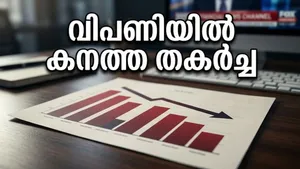 വിപണിയിൽ കനത്ത ഇടിവ്; നിക്ഷേപകരെ ആശങ്കയിലാക്കി സെൻസെക്സും നിഫ്റ്റിയും കൂപ്പുകുത്തി
 -
 വിപണിയിൽ കാളക്കൂറ്റന്മാരുടെ തിരിച്ചുവരവ്; നിഫ്റ്റിയും സെൻസെക്സും കുതിച്ചുയർന്നത് എങ്ങനെ?
 -
 വിപണിയിൽ വൻ കുതിപ്പിന് കളമൊരുങ്ങുന്നു; ഈ ഓഹരികൾ ശ്രദ്ധിക്കാതെ പോകരുത്!
 -
 തിങ്കളാഴ്ച വിപണിയിൽ എന്ത് സംഭവിക്കും? നിക്ഷേപകരെ കാത്തിരിക്കുന്നത് വൻ അട്ടിമറികളോ?
-
Block for 8 hours
-
Block for 12 hours
-
Block for 24 hours
-
Don't block

 Sign in with Google
- Male
- Female
- Others
- Under 18
- 18 to 25
- 26 to 35
- 36 to 45
- 45 to 55
- 55+