
 A Oneindia Venture


 Click it and Unblock the Notifications
Notes to Accounts of Peoples Investments Ltd.
Mar 31, 2025
J. Provisions and contingent liabilities
Provisions are recognised when the company has a present legal or constructive obligation as a
result of past events, it is probable that an outflow of resources will be required to settle the
obligation and the amount can be reliably estimated. Provisions are not recognised for future
operating losses.
Provisions are measured at the present value of management''s best estimate of the expenditure
required to settle the present obligation at the end of the reporting period. The discount rate
used to determine the present value is a pre tax rate that reflects current market assessments
of the time value of money and the risks specific to the liability. The increase in the provision
due to the passage of time is recognised as interest expense.
Contingent Liabilities are disclosed in respect of possible obligations that arise from past events
but their existence will be confirmed by the occurrence or non occurrence of one or more
uncertain future events not wholly within the control of the company or where any present
obligation cannot be measured in terms of future outflow of resources or where a reliable
estimate of the obligation cannot be made.
A contingent asset is disclosed, where an inflow of economic benefits is probable. An entity
shall not recognise a contingent asset unless the recovery is virtually certain.
K. Deferred tax Asset
The Company has not created any Deferred tax assets as there is no foreseeable profit in future
years and hence deferred tax is
not recognized.
Note 15 - Additional regulatory information required by Schedule III
i Details of benami property held
No proceedings have been initiated on or are pending against the Company for holding benami property under the Benami
Transactions (Prohibition) Act, 1988 (45 of 1988) and Rules made thereunder.
ii Borrowing secured against current assets
The Company has no borrowings from banks and financial institutions on the basis of security of current assets.
iii Wilful defaulter
The Company has not been declared wilful defaulter by any bank or financial institution or government or any government
authority.
iv Relationship with struck off companies
The Company has no transactions with the companies struck off under Companies Act, 2013 or Companies Act, 1956.
v Compliance with number of layers of companies
The Company has complied with the number of layers prescribed under the Companies Act, 2013.
vi Compliance with approved scheme(s) of arrangements
The Company has not entered into any scheme of arrangement which has an accounting impact on current or previous
financial year.
vii Utilisation of borrowed funds and share premium
The Company has not advanced or loaned or invested funds to any other person(s) or entity(ies), including foreign entities
(Intermediaries) with the understanding that the Intermediary shall:
a. directly or indirectly lend or invest in other persons or entities identified in any manner whatsoever by or on behalf of the
Company (Ultimate Beneficiaries) or
b. provide any guarantee, security or the like to or on behalf of the ultimate beneficiaries
The Company has not received any fund from any person(s) or entity(ies), including foreign entities (Funding Party) with the
understanding (whether recorded in writing or otherwise) that the Company shall:
directly or indirectly lend or invest in other persons or entities identified in any manner whatsoever by or on behalf of the
Funding Party (Ultimate Beneficiaries) or
b. provide any guarantee, security or the like on behalf of the ultimate beneficiaries
viii Undisclosed income
There is no income surrendered or disclosed as income during the current or previous year in the tax assessments under the
Income Tax Act, 1961, that has not been recorded in the books of account.
ix Details of crypto currency or virtual currency
The Company has not traded or invested in crypto currency or virtual currency during the current or previous year.
x Valuation of PP&E, intangible asset and investment property
The Company has not revalued its property, plant and equipment (including right-of-use assets) or intangible assets or both
during the current or previous year.
Note 18 - Financial Risk Management
Capital Management
For the purpose of the company''s capital management, capital includes issued capital and all other
equity reserves attributable to the equity shareholders of the group. The primary objective of the
group when managing capital is to safeguard its ability to continue as a going concer and to maintain
an optimal capital structure so as to maximize shareholder value.
As at 31st March, 2025 and 31st March, 2024, the Company has only one class of equity shares.
Consequent to such capital structure, there are no externally imposed capital requirements. In order
to maintain or achieve an optimal capital structure, the company allocates its capital for distribution
as dividend or re-investment into business based on its long term financial plans.
Liquidity Risk
Liquidity risk is defined as the risk that the group will not be able to settle or meet its obligations on
time, or at a reasonable price. The group''s treasury department is responsible for liquidity, funding as
well as settlement management. In addition, processes and policies related such risk are overseen by
senior management. Management monitors the group''s net liquidity position through rolling forecasts
on the basis of expected cash flows.
Credit Risk
(i) Cash and cash equivalents:
The company maintains its cash and cash equivalents, bank deposits and investment in mutual funds
with reputed banks and financial institutions. The credit risk on these instruments is limited because
the counterparties are banks with high credit ratings assigned by international credit rating agencies.
The group monitors the credit rating of the counterparties on regular basis. These instruments carry
very minimal credit risk based on the financial position of company''s historical experience of dealing
with the parties.
Financial Instrument by category and hierarchy
The fair values of the financial assets and liabilities are included at the amount at which the instrument
could be exchanged in a current transaction between willing parties, other than in a forced or
liquidation sale.
The following methods and assumptions were used to estimate the fair values:
1. Fair value of cash and short-term deposits, trade and other short term receivables, trade payables,
other current liabilities, short term loans from banks and other financial institutions approximate
their carrying amounts largely due to short term maturities of these instruments.
2. Financial instruments with fixed and variable interest rates are evaluated by the Company based
on parameters such as interest rates and individual credit worthiness of the counterparty. Based
on this evaluation, allowances are taken to account for expected losses of these receivables.
Accordingly, fair value of such instruments is not materially different from their carrying amounts.
The Company uses the following hierarchy for determining and disclosing the fair value of financial
instruments by valuation technique:
Level 1: quoted (unadjusted) prices in active markets for identical assets or liabilities.
Level 2: other techniques for which all inputs which have a significant effect on the recorded fair value
are observable, either directly or indirectly.
Level 3: techniques which use inputs that have a significant effect on the recorded fair value that are
not based on observable market data.
Note 20 - Related party disclosures
i) Directors:
a) Shri Shantilal Pokharna
b) Shri R. Narayanan
c) Shri Jitender Agarwal
d) Smt Suma Nair
e) Shri Ashok Khedekar
f) Shri B. Padmanabham (From December 03, 2024)
ii) Person having significant influence:
a) Shri Vijaypat Singhania
iii) Enterprises where person in 20(ii) have significant influence:
a) Polar Investments Limited
iv) Transaction During the year: (Rs. in ''000)
Director''s Sitting Fee - 5
There has been no transaction with the related parties abovementioned in 20 (iii) (a) during the year.
Note 21 - Contingent Liabilities and commitments - Nil
Note 22 - Commitments - Nil
Previous year''s figures have been regrouped/rearranged wherever necessary.
As per our report of even date attached For and on behalf of the Board
For Khandhar Mehta and Shah
Chartered Accountants
Firm Reg. No. 125512W
C.A. Gautam Mehta Suryakant Khare S.L.Pokharna Jitender Agarwal
Partner Chief Financial Officer Director Director
Membership No. 112626 and Company Secretary Din: 01289850 Din: 06373239
Place : Ahmedabad
Date : May 20, 2025
Mar 31, 2024
J. Provisions and contingent liabilities
Provisions are recognised when the company has a present legal or constructive obligation as a result of past events, it is probable that an
outflow of resources will be required to settle the obligation and the amount can be reliably estimated. Provisions are not recognised for
future operating losses.
Provisions are measured at the present value of management''s best estimate of the expenditure required to settle the present obligation
at the end of the reporting period. The discount rate used to determine the present value is a pre tax rate that reflects current market
assessments of the time value of money and the risks specific to the liability. The increase in the provision due to the passage of time is
recognised as interest expense.
Contingent Liabilities are disclosed in respect of possible obligations that arise from past events but their existence will be confirmed by
the occurrence or non occurrence of one or more uncertain future events not wholly within the control of the company or where any
present obligation cannot be measured in terms of future outflow of resources or where a reliable estimate of the obligation cannot be
made.
A contingent asset is disclosed, where an inflow of economic benefits is probable. An entity shall not recognise a contingent asset unless
the recovery is virtually certain.
K. Deferred tax Asset
The Company has not created any Deferred tax assets as there is no foreseeable profit in future years and hence deferred tax is
not recognized.
Capital Management
For the purpose of the company''s capital management, capital includes issued capital and all other equity reserves attributable to the equity
shareholders of the group. The primary objective of the group when managing capital is to safeguard its ability to continue as a going concern
and to maintain an optimal capital structure so as to maximize shareholder value.
As at 31st March, 2024 and 31st March, 2023, the Company has only one class of equity shares. Consequent to such capital structure, there are
no externally imposed capital requirements. In order to maintain or achieve an optimal capital structure, the company allocates its capital for
distribution as dividend or re-investment into business based on its long term financial plans.
Liquidity Risk
Liquidity risk is defined as the risk that the group will not be able to settle or meet its obligations on time, or at a reasonable price. The group''s
treasury department is responsible for liquidity, funding as well as settlement management. In addition, processes and policies related such
risk are overseen by senior management. Management monitors the group''s net liquidity position through rolling forecasts on the basis of
expected cash flows.
Credit Risk
(i) Cash and cash equivalents:
The company maintains its cash and cash equivalents, bank deposits and investment in mutual funds with reputed banks and financial
institutions. The credit risk on these instruments is limited because the counterparties are banks with high credit ratings assigned by
international credit rating agencies. The group monitors the credit rating of the counterparties on regular basis. These instruments carry very
minimal credit risk based on the financial position of company''s historical experience of dealing with the parties.
The fair values of the financial assets and liabilities are included at the amount at which the instrument could be exchanged in a current transaction between willing parties, other than in a forced or liquidation sale.
The following methods and assumptions were used to estimate the fair values:
1. Fair value of cash and short-term deposits, trade and other short term receivables, trade payables, other current liabilities, short term loans from banks and other financial institutions approximate their
carrying amounts largely due to short term maturities of these instruments.
2. Financial instruments with fixed and variable interest rates are evaluated by the Company based on parameters such as interest rates and individual credit worthiness of the counterparty. Based on this
evaluation, allowances are taken to account for expected losses of these receivables. Accordingly, fair value of such instruments is not materially different from their carrying amounts.
The Company uses the following hierarchy for determining and disclosing the fair value of financial instruments by valuation technique:
Level 1: quoted (unadjusted) prices in active markets for identical assets or liabilities.
Level 2: other techniques for which all inputs which have a significant effect on the recorded fair value are observable, either directly or indirectly.
Level 3: techniques which use inputs that have a significant effect on the recorded fair value that are not based on observable market data.
Nil
Note 22 - Commitments
Nil
Previous year''s figures have been regrouped/rearranged wherever necessary.
FOR AND ON BEHALF OF THE BOARD
AS PER OUR REPORT OF EVEN DATE ATTACHED
For Khandhar Mehta and Shah
Chartered Accountants
Firm Registration No. 125512W
CA- Gautam Mehta _Suryakant Khare S.L. POKHARNA JITENDER AGARWAL
Partner Chief Financial Officer DIRECTOR DIRECTOR
Membership M°. 112626 and Company Secretary Din : 01289850 Din : 06373239
Place: Mumbai
Place : Ahmedabad. Date: May 16, 2024
Date : 16-05-2024.
Mar 31, 2015
Rights of party shareholders:.
1.The Company has only c class equalty there ralus of Rs.10 each l ,
Each shareholder is ended to end to vote per share is the of
of the company that the holder of below of fciuun will ended to any of
the raiuining assets no after of all proferended
Deferred tax assets on account of other timing differences are
recognised only to the extent there is a reasonable certainty of its
realisation. At each Balance sheet date. the carrying amount Of
deferred tax assets is reviewed to reassure realisation
2. Deferreri Tax Assets/liabilities
AS a mature of prudence, the management has not recognised deferred tax
assets in respect of earned forward losses.
3. Segmat Information;
As per the Accounting Standnrd 17 Company's business activity falls
within a single segment viz. Investment Activity and consultancy
services.
4. Earning Per Share
The net profii for the purpose of measurement basic and diluted EPS- in
terms of Accounting Standard 20 on Earning Per Share issued by the
Institute of Charted Accountants of India has been calculated as under-
5. Related parties disclosures
6. Enterprise where control exits:
a) Polar lnvestments Limited
b) Radha Krshna films Limited
7. Associate Concern:
a) Impex India Ltd.
There has been no transaction with the related parties mentioned in 5.1
above during the year.
income received of Rs. 2,50,000/- (previous year Rs. Nil ) from party
mentioned in 5 2 above during the year.
8. Previous year's Figures have bean regrouped/rearranged wherever
necessary.
Mar 31, 2014
1. Shareholders'' Funds - Share Capital
Rights or equity shareholders:
The company has only one class of equity share having par value of Rs.
10 each Each shareholder is entitled to one vole per share. In the
event of liquidation of the company, the holder of equity share will be
entitled to receive any of the remaining assets of the company alter
distribution of all preferential amounts.
2. Deferred Tax Assets/Liabilities
As a mailer of prudence, the management has not recognised deferred tax
assets in respect of carried forward losses.
3. Segment Information:
As per the Accounting. Standard 17 Company''s business activity falls
within a single segment viz. Investment Activity.
4. Earning Per Share
The net profit for the purpose of measurement of basic and diluted EPS
in terms of Accounting Standard 20 on Earning Per Share issued by the
Institute of Chartered Accountants of India has been calculated.
5. Related parties disclosures
5.1 Enterprises where control exits:
a) Polar Investments Limited.
b) Radha Krishna Films Limited.
There has been no transaction with the related parties mentioned in 5.1
above during the year.
6. Previous year''s figures have been regrouped/rearranged wherever
necessary.
Mar 31, 2013
1. Deferred Tax Assets/Liabilities
As a matter of prudence, the management has not recognised deferred tax
assets in respect of carried forward losses.
2. Segment Information:
As per the Accounting Standard 17 Company''s business activity falls
within a single segment viz. Investment Activity.
3. Earning Per Share
The net profit for the purpose of measurement of basic and diluted EPS
in terms of Accounting Standard 20 on Earning Per Share issued by the
Institute of Chartered Accountants of India has been calculated as
under:
4. Related parties disclosures
4.1 Enterprises where control exits:
a) Polar Investments Limited.
b) Radha Krshna Films Limited.
There has been no transaction with the related parties mentioned in 5.1
above duing the year.
5. Previous year''s figures have been regrouped/rearranged wherever
necessary.
Mar 31, 2012
Rights of equity shareholders:
The company has only one class of equity share having par value of
Rs.10 each. Each shareholder is entitled to one vote per share. In the
event of liquidation of the company, the holder of equity share will be
entitled to receive any of the remaining assets of the company after
distribution of all preferential amounts.
1. Deferred Tax Assets/Liabilities
As a matter of prudence, the management has not recognized deferred tax
assets in respect of carried forward losses.
2. Segment Information:
As per the Accounting Standard 17 Company's business activity falls
within a single segment viz. Investment Activity.
3. Earning Per Share
The net profit for the purpose of measurement of basic and diluted EPS
in terms of Accounting Standard 20 on Earning Per Share issued by the
Institute of Chartered Accountants of India has been calculated as
under:
4. Related parties disclosures
4.1 Enterprises where control exits:
a) Polar Investments Limited.
b) Radha Krshna Films Limited.
There has been no transaction with the related parties mentioned in 5.1
above during the year.
5. Previous year's figures have been regrouped/rearranged wherever
necessary.
Mar 31, 2011
1. Deferred Tax Assets/Liabilities
As a matter of prudence, the management has not recognised deferred tax
assets in respect of carried forward losses.
2. Segment Information:
As per the Accounting Standard 17 Company's business activity falls
within a single segment viz. Investment Activity.
3. Related parties disclosures
3.1 Enterprises where control exits:
a) Polar Investments Limited.
b) Radha Krshna Films Limited.
There has been no transaction with the related parties mentioned in 5.1
above duing the year.
4. Being an Investment Company information required vide paras 4C and
4D of part II of the Schedule VI of the Companies Act, 1956 is not
applicable to the Company.
5. Previous year's figures have been regrouped/rearranged wherever
necessary.
Mar 31, 2010
1. Deferred Tax Assets/Liabilities
As a matter of prudence, the management has not recognised deferred tax
assets in respect of carried forward losses.
2. Segment Information:
As per the Accounting Standard 17 Companys business activity falls
within a single segment viz. Investment Activity.
3. Earning Per Share
The net profit for the purpose of measurement of basic and diluted EPS
in terms of Accounting Standard 20 on Earning Per Share issued by the
Institute of Chartered Accountants of India has been calculated as
under:
4. Related parties disclosures
4.1 Enterprises where control exits:
a) Polar Investments Limited.
b) Radha Krshna Films Limited.
There has been no transaction with the related parties mentioned in 5.1
(a) and 5.1 (b) above during the year.
5. Being an Investment Company information required vide paras 4C and
4D of part II of the Schedule VI of the Companies Act, 1956 is not
applicable to the Company.
6. Previous years figures have been regrouped/rearranged wherever
necessary.
Disclaimer: This is 3rd Party content/feed, viewers are requested to use their discretion and conduct proper diligence before investing, GoodReturns does not take any liability on the genuineness and correctness of the information in this article
More Information on Peoples Investments Ltd.
-
Peoples Investments Ltd. Tools
- Bulk Deals
-
Peoples Investments Ltd. Company Details
- Company Profile
- Company History
- Management Team
- Capital Structure
- Product Mix
- Banker/Auditor/Registrar
-
Company History
- BSE Price History
-
Peoples Investments Ltd. Key Financial Ratios
- Ratios
-
Peoples Investments Ltd. Results
- Quarterly Results
- Half Yearly Results
- Nine Months Results
- Annual Results
-
Peoples Investments Ltd. Financial Data
- Audited Results
- Cash Flow
- Balance Sheet
-
Peoples Investments Ltd. Reports
- Accounting Policies
- Auditors Report
- Directors Report
- Notes To Account
-
Peoples Investments Ltd. Corporate Announcements
- Book Closure
- Board Meetings
-
 ഓഹരി വിപണിയിൽ വൻ കുതിപ്പ്: സെൻസെക്സും നിഫ്റ്റിയും കുതിച്ചുയരുന്നു, നിക്ഷേപകർക്ക് വൻ നേട്ടം
 -
 വിപണിയിൽ വൻ ചാഞ്ചാട്ടം; ഐടി ഓഹരികളുടെ കുതിപ്പിനിടെ നിക്ഷേപകർ ഉറ്റുനോക്കുന്ന ആ നിർണ്ണായക തീരുമാനം ഇതാ!
 -
 കോൾ ഇന്ത്യ സെറ്റിൽമെന്റും വാഹന വിൽപന കണക്കുകളും; നിഫ്റ്റിയിൽ ഇന്ന് വൻ മാറ്റങ്ങൾക്ക് സാധ്യതയോ?
 -
 വെള്ളിയാഴ്ചത്തെ വിപണി തകർച്ച: നിക്ഷേപകരുടെ പണം ഒലിച്ചുപോയോ? സെൻസെക്സ് വീഴ്ചയ്ക്ക് പിന്നിലെ ഞെട്ടിക്കുന്ന കാരണങ്ങൾ ഇതാ!
 -
 സെൻസെക്സ് ഇടിവ് തുടരുമോ? തിങ്കളാഴ്ച വിപണിയിൽ വൻ മാറ്റങ്ങൾക്ക് സാധ്യത, നിക്ഷേപകർ ശ്രദ്ധിക്കേണ്ട കാര്യങ്ങൾ ഇതാ!
 -
 സെൻസെക്സും നിഫ്റ്റിയും കുതിക്കുന്നു; ഓഹരി വിപണിയിലെ ഈ വമ്പൻ മുന്നേറ്റത്തിന് പിന്നിലെ യഥാർത്ഥ കാരണം ഇതാണ്!
 -
 മൺസൂൺ കാറ്റിൽ വിപണി കുതിക്കുമോ? നിക്ഷേപകർ ശ്രദ്ധിക്കേണ്ട നിർണ്ണായക മാറ്റങ്ങളും ഐപിഒ അവസരങ്ങളും ഇതാ!
 -
 വിപണിയിൽ വൻ കുതിപ്പ്; സെൻസെക്സും നിഫ്റ്റിയും റെക്കോർഡ് ഉയരത്തിലേക്ക്, നിക്ഷേപകർക്ക് ഇനി എന്ത് സംഭവിക്കും?
 -
 ഓഹരി വിപണിയിൽ കടുത്ത ചാഞ്ചാട്ടം; നിക്ഷേപകർക്ക് ആശങ്കയോ അതോ അവസരമോ? സെൻസെക്സ് നൽകുന്ന സൂചനകൾ ഇതാ!
 -
 വിപണിയിൽ വൻ തകർച്ച; നിക്ഷേപകരെ ഞെട്ടിച്ച് സെൻസെക്സും നിഫ്റ്റിയും കൂപ്പുകുത്തിയതെങ്ങനെ?
 -
 വിപണിയിൽ തളർച്ച, പക്ഷേ ഓട്ടോ ഓഹരികളിൽ വൻ കുതിപ്പ്; നിക്ഷേപകർക്ക് ഇനി എന്ത് സംഭവിക്കും?
 -
 മെയ് 8: വിപണിയിൽ കുതിപ്പിന് സാധ്യതയോ? നിക്ഷേപകർ ശ്രദ്ധിക്കേണ്ട നിർണ്ണായക ഘടകങ്ങൾ ഇതാ!
 -
 വിപണിയിൽ കനത്ത ഇടിവ്; നിക്ഷേപകരെ ആശങ്കയിലാക്കി സെൻസെക്സും നിഫ്റ്റിയും കൂപ്പുകുത്തി
 -
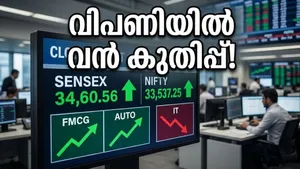 വിപണിയിൽ കാളക്കൂറ്റന്മാരുടെ തിരിച്ചുവരവ്; നിഫ്റ്റിയും സെൻസെക്സും കുതിച്ചുയർന്നത് എങ്ങനെ?
 -
 വിപണിയിൽ വൻ കുതിപ്പിന് കളമൊരുങ്ങുന്നു; ഈ ഓഹരികൾ ശ്രദ്ധിക്കാതെ പോകരുത്!
 -
 തിങ്കളാഴ്ച വിപണിയിൽ എന്ത് സംഭവിക്കും? നിക്ഷേപകരെ കാത്തിരിക്കുന്നത് വൻ അട്ടിമറികളോ?
-
Block for 8 hours
-
Block for 12 hours
-
Block for 24 hours
-
Don't block

 Sign in with Google
- Male
- Female
- Others
- Under 18
- 18 to 25
- 26 to 35
- 36 to 45
- 45 to 55
- 55+